

What happens when companies can grow without hiring as many people? And what happens when the tools driving that change become available to the people trying to understand it?
I have followed Dror Poleg for his writing on technology, work and the economy. For Factory Life, Hugo and I invited him to share both his view of what is changing and the AI tools he has built to support his research.
Dror showed us a personal system that collects information, helps him find patterns and keeps track of his own predictions. He also talked about the choices he makes about what to delegate and what to keep for himself.
Growth Without Hiring
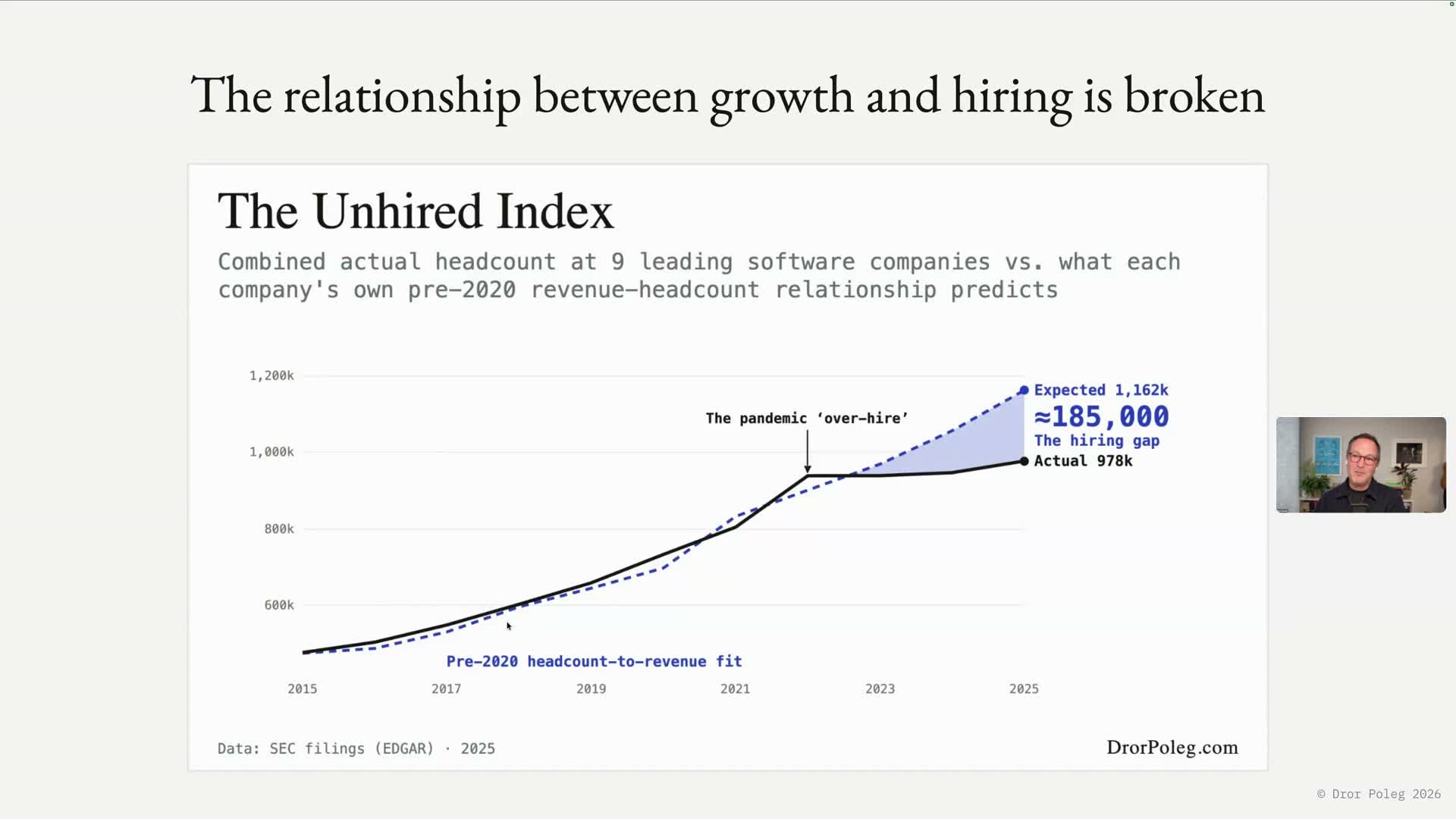
Dror began with a striking change in the relationship between revenue and headcount at large software companies. His “Unhired Index” compares the number of people nine companies employ with the number their earlier relationship between revenue and employment would have predicted.
His estimate suggests a substantial gap. That is an interesting signal, though it does not tell us how much of the change AI caused. Hiring during the pandemic, the subsequent correction and other shifts in how companies operate all complicate the picture. Dror was careful about that distinction.
He also discussed signs of pressure on entry-level work. Even if new roles appear over time, the transition matters: people need a way into a profession and opportunities to build experience. A discussion about the total number of jobs can miss what happens to the people trying to find a first one.
“Even if the jobs remain, often the quality of the job changes.”
For a company leader, this raises a question beyond how many roles a new tool can save. If experienced people can do more with agents, how will the next generation acquire the experience the organisation will need?
A System Built Around His Work
Dror’s own use of AI starts with a problem many of us recognise: there is more to read, track and remember than one person can comfortably manage. His system gathers information from sources he chooses and helps him decide what deserves his attention.
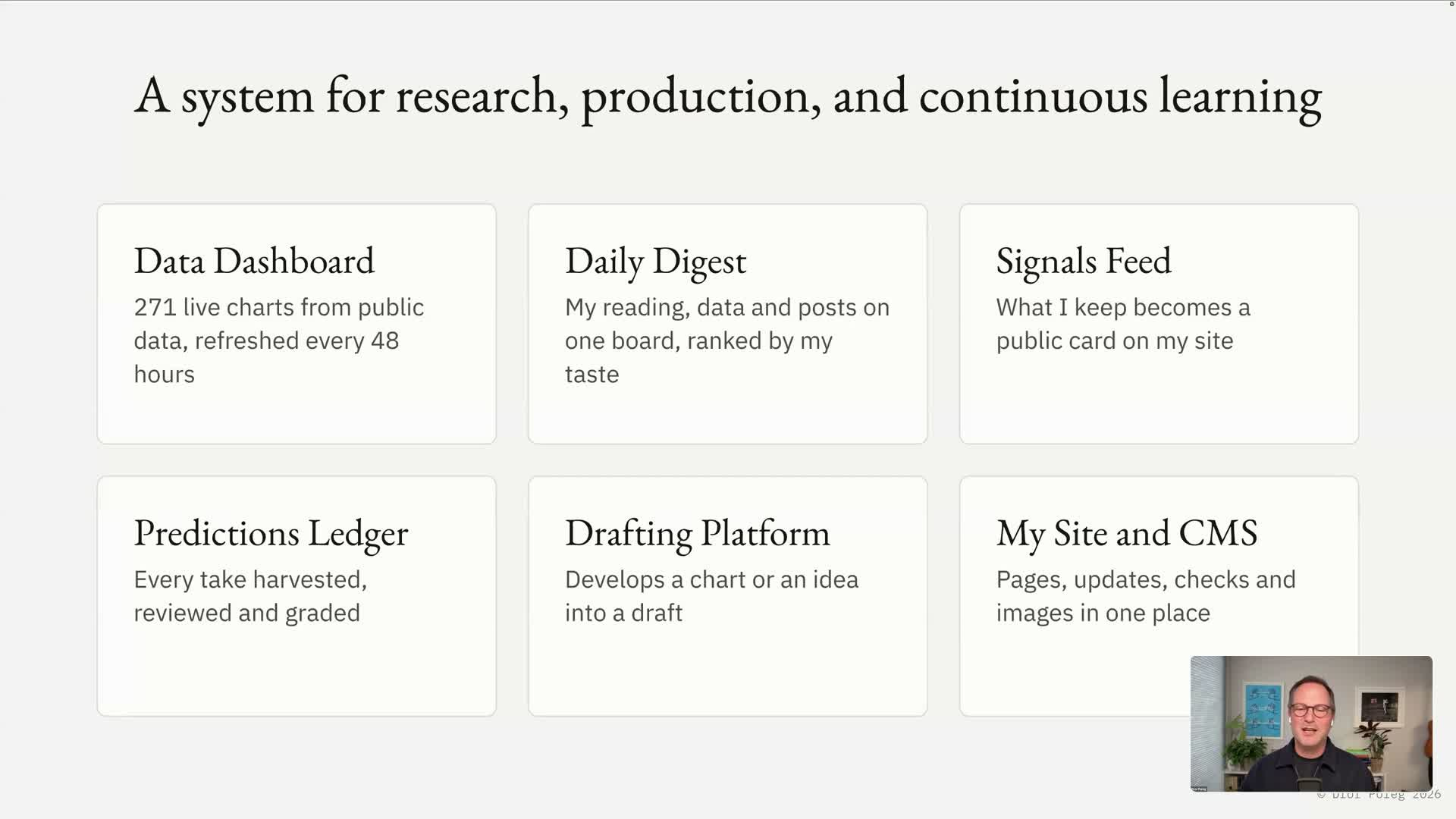
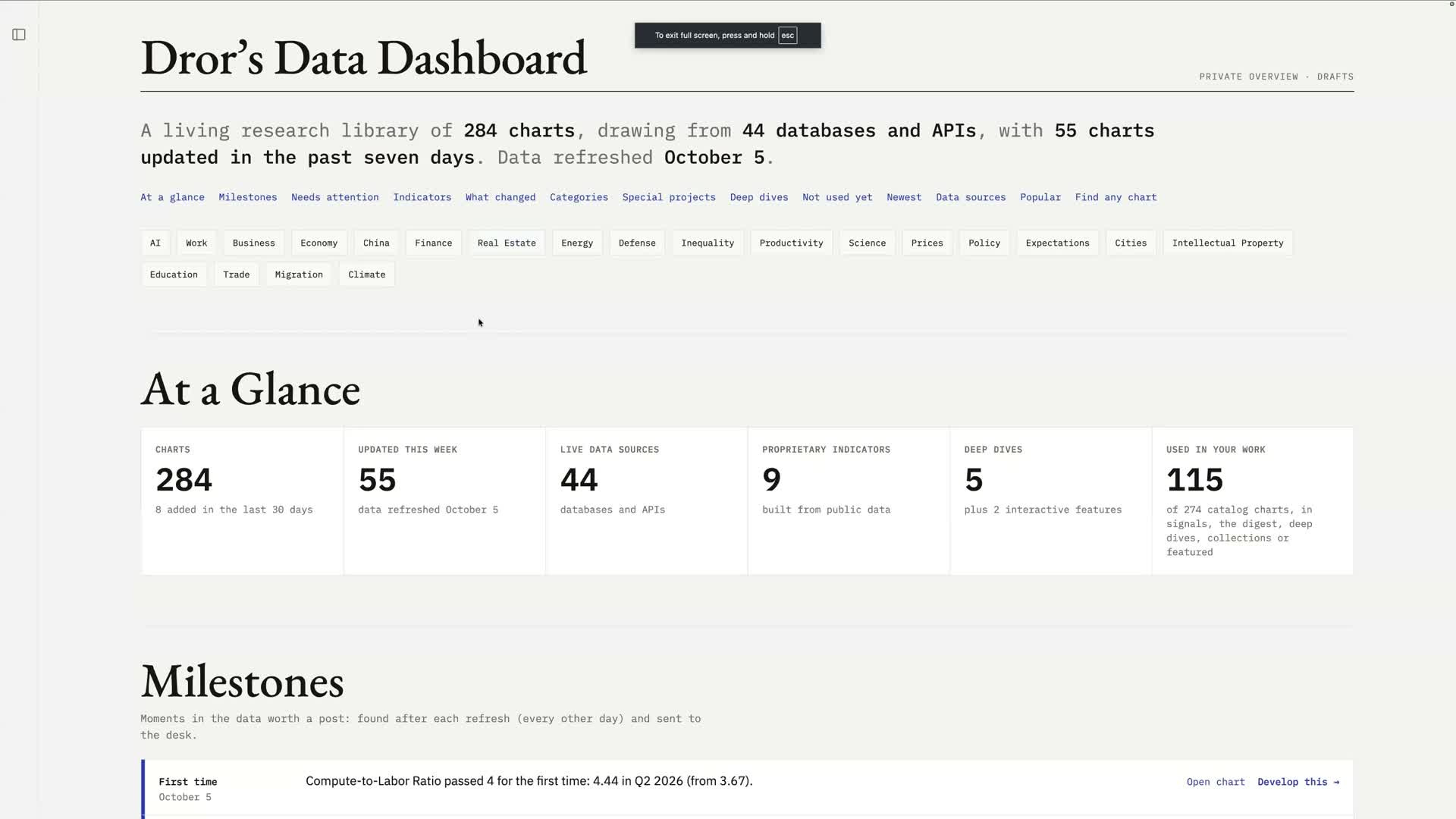
One part is a data dashboard. It collects information from dozens of sources and proposes charts. Dror can inspect what is behind them and decide which ones are worth using. The system helps him find material; the judgement about what it means remains his.
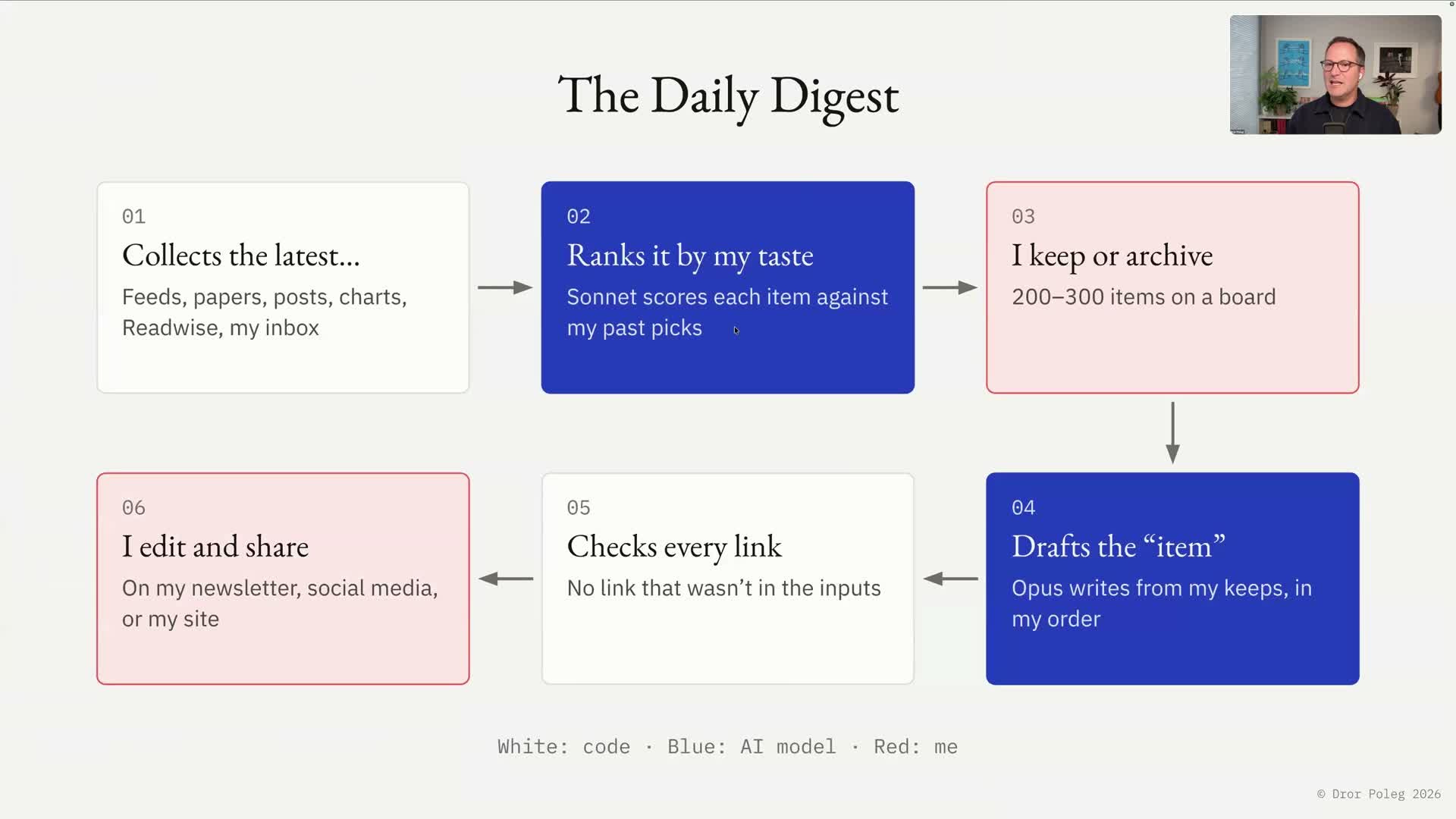
Another part is a daily digest. It gathers feeds, papers, posts, highlights and material from his inbox, then ranks items against his interests. Dror keeps or archives the suggestions. The system can prepare a draft from the items he selects and check that its links come from the supplied material. He edits and decides what to share.
“I decide what to keep and what to archive.”
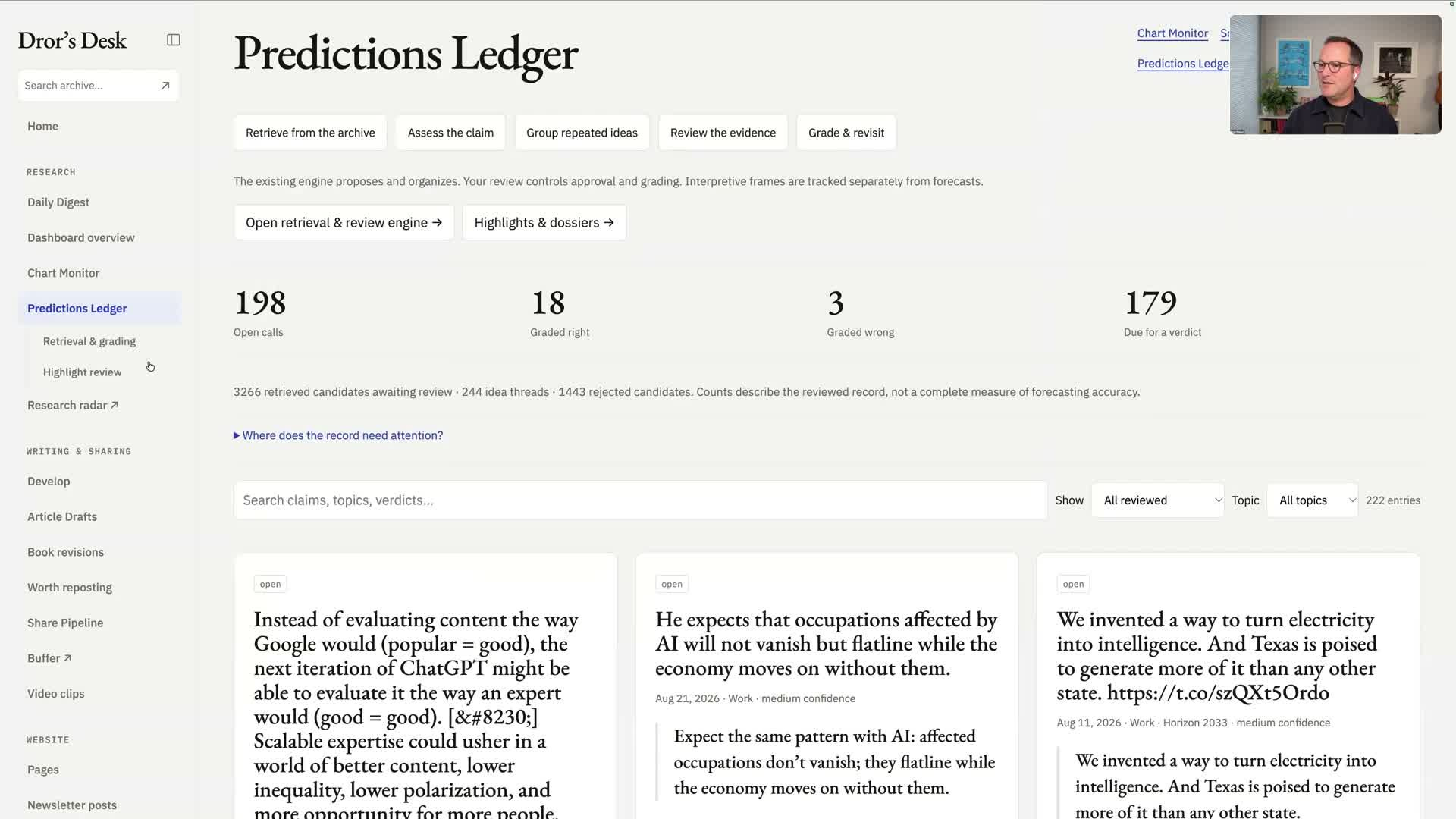
He also built a predictions ledger. It looks through his past writing and talks for claims about the future, proposes entries and helps him track what happened. The ledger keeps a record of what he said before the outcome was known, making it easier to revisit and assess his predictions.
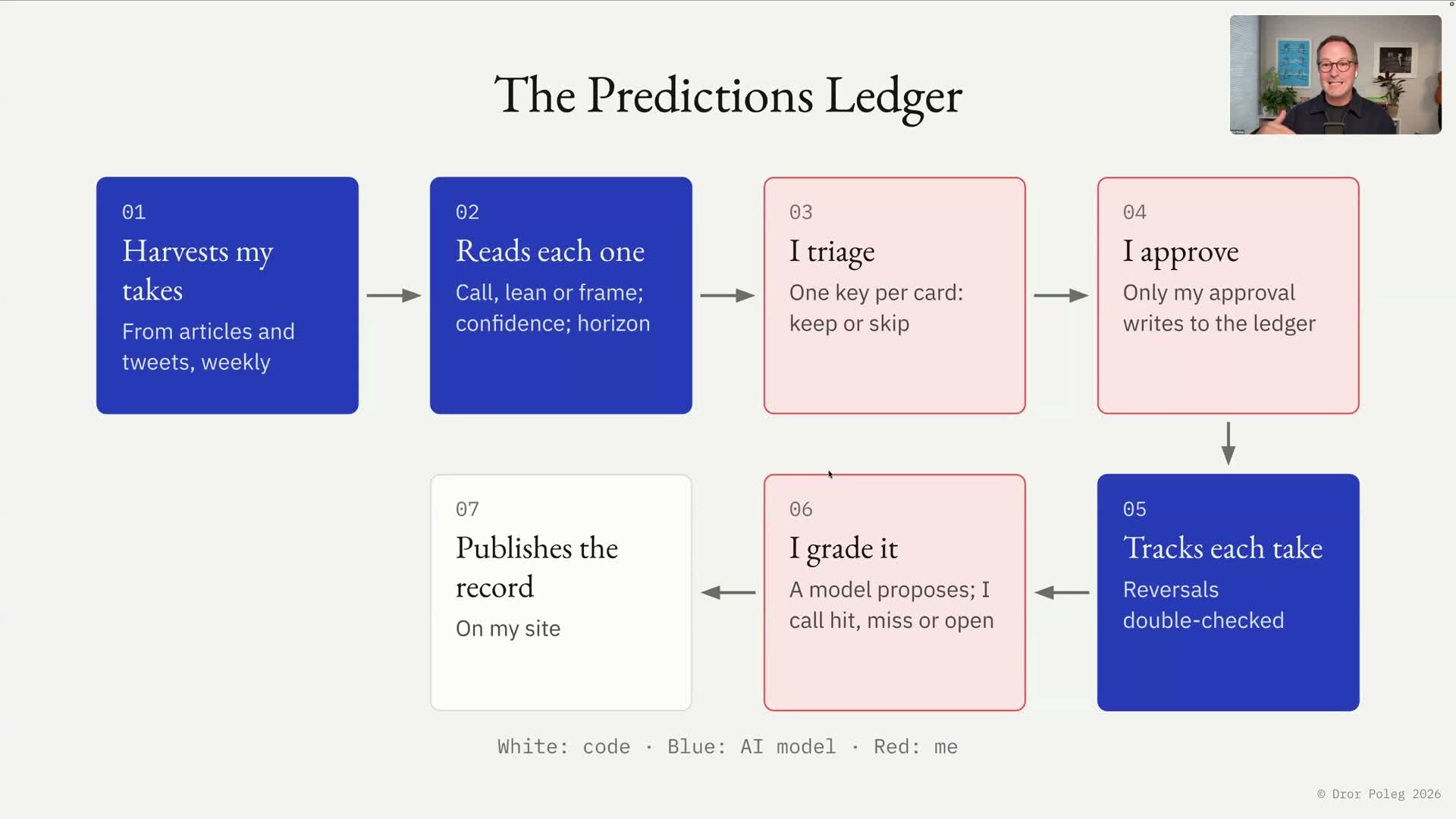
A separate drafting tool helps him research an idea and prepare a brief. Dror said he had not published an article from it as written. The distinction matters: a tool can help gather material and develop an argument without taking over the author’s judgement.
Give the System Rules and Check Its Work
AI is useful in Dror’s workflow, but he does not ask a model to handle every step. He uses ordinary code for checks that can be stated as rules: for example, making sure a link came from an input rather than being invented. He also described tests and additional checks on claims.
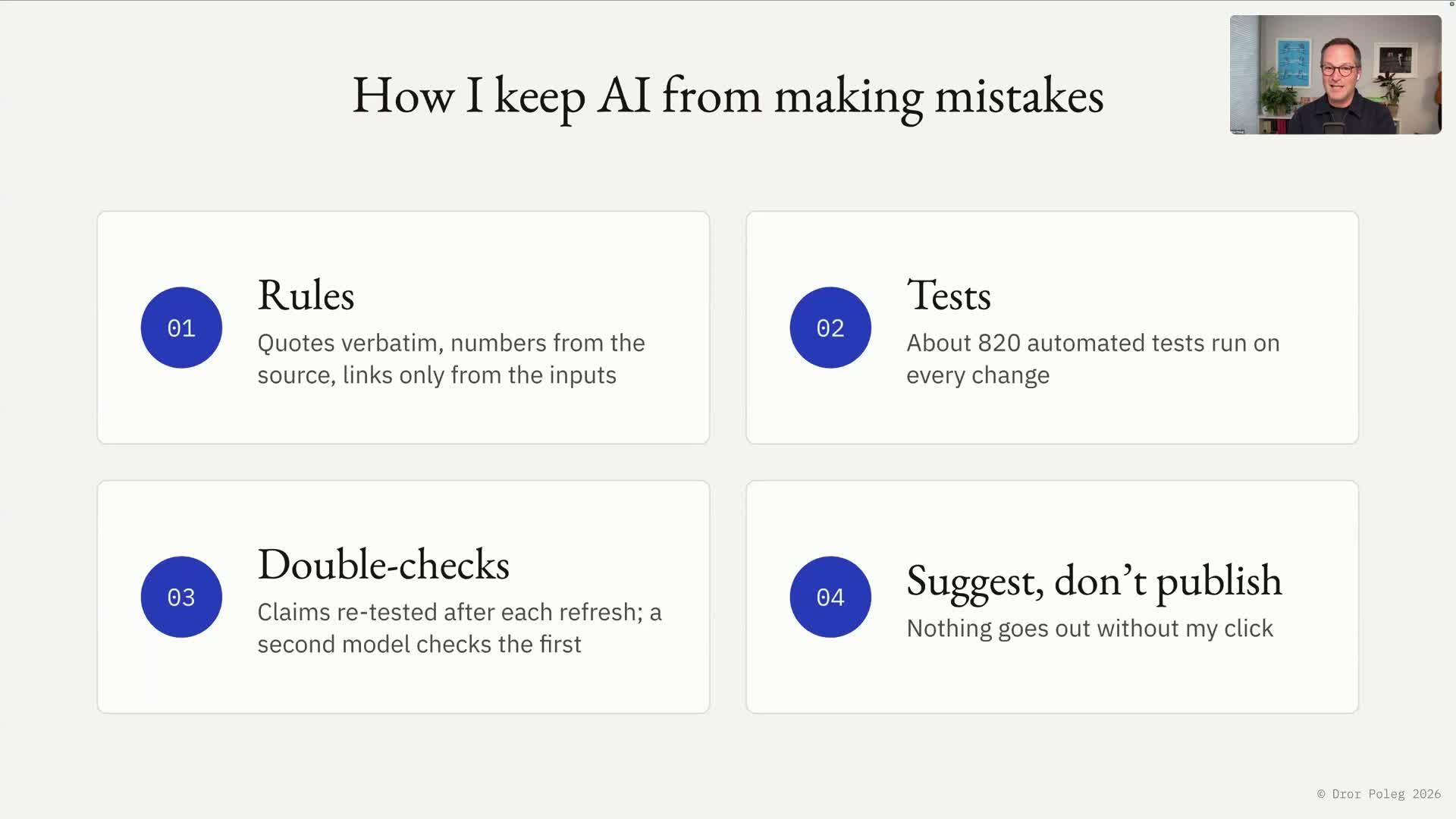
Those checks reduce particular risks; they do not prove that every interpretation is right. Someone still needs to judge whether a source is reliable, whether a chart supports the conclusion and whether the result is worth publishing. In Dror’s system, nothing goes out without his decision.
This is a useful way to think about AI in any organisation. Start with the work and decide what each part requires. A model can help with a task that calls for interpretation. A conventional programme can enforce a rule. A person can make the decision that needs context, responsibility or taste.
Learning by Building
Dror’s talk connected his research with his own practice. He studies the consequences of AI while building with it. Working on the system gives him direct experience of what the tools can do, where they fail and how much direction and checking they need.
“For me, the main value here was in the building itself.”
That experience does not settle the bigger economic questions. It does offer a way to ask better ones. Instead of treating AI as a single capability that either replaces a job or leaves it untouched, we can look at the work: what can be delegated, what needs a check and what a person becomes able to do with the time and capacity that remain.
In the discussion, Dror returned to the importance of making those choices deliberately. He uses AI to go deeper into questions that interest him while keeping control of his own thinking and what he publishes.
“I don’t want it to replace me or think for me.”
Find Dror and Follow His Work
Dror Poleg is an economic historian and author who writes about how technology changes work, places and markets. His forthcoming book explores the new rules of work, wealth and power. He is also the author of Rethinking Real Estate.
You can explore his research, charts and essays on his website, and subscribe to his newsletter for his writing on AI, work and the economy. He also shares updates on X and LinkedIn.
Build Your Agentic Software Factory

Hugo and I are teaching Build Your Agentic Software Factory again from 1–11 March 2027.
You’ll set up a factory of your own, give agents work and context, check what they produce and build a working application. We’ll work together in live workshops, with office hours for questions. You can bring your own idea, and you don’t need coding experience to take part.